
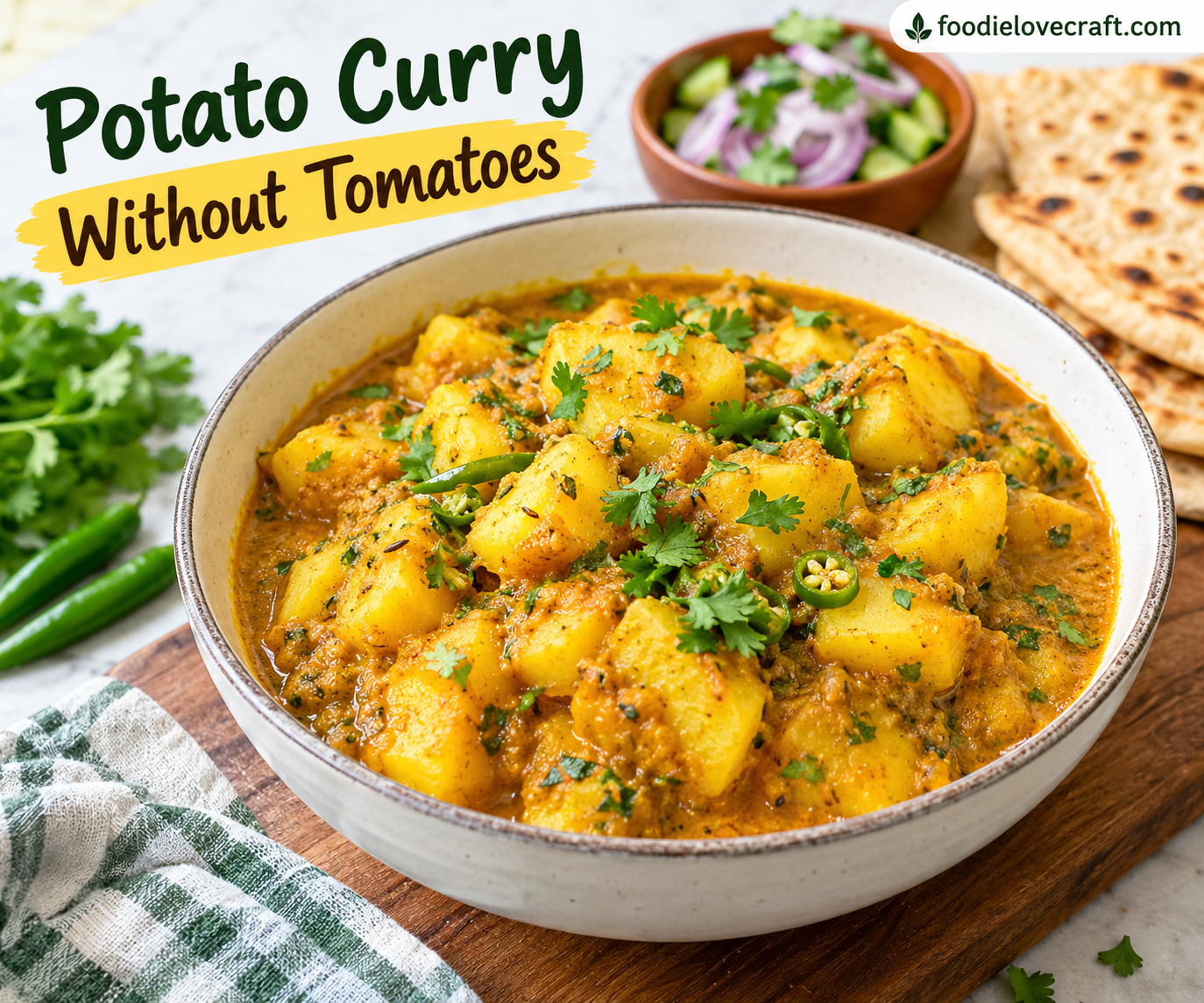
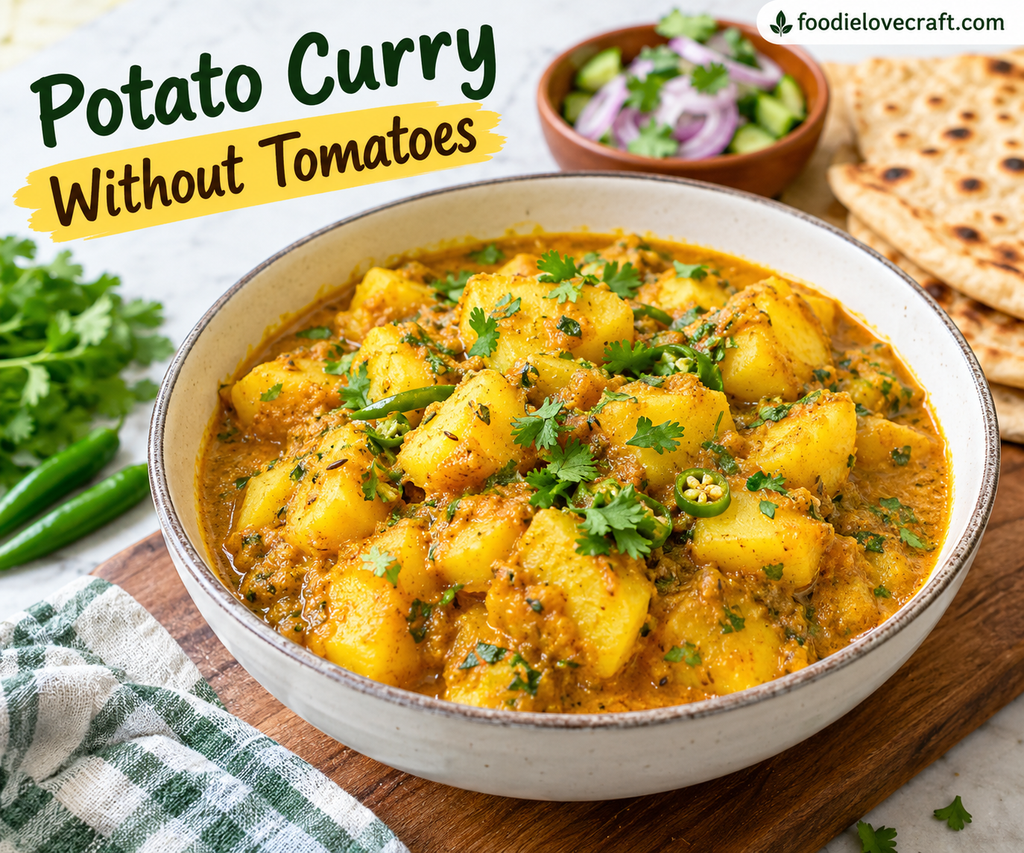
There is something wonderfully comforting about a warm bowl of homemade potato curry. It is simple, filling, budget-friendly, and can turn a few basic pantry ingredients into a delicious meal. If you are looking for a potato curry without tomatoes, you will be happy to know that you do not need tomatoes to create a rich, flavorful curry.
Tomatoes are commonly used in many curry recipes because they add acidity, moisture, and a little sweetness. However, potatoes can be cooked beautifully with onions, spices, yogurt, herbs, and other simple ingredients. The result is a flavorful curry with tender potatoes and a deliciously spiced gravy that pairs perfectly with rice, roti, naan, or paratha.
This recipe is especially useful when you have potatoes at home but no tomatoes in the kitchen. It is also a great option for people who simply prefer tomato-free curries.
Why You’ll Love This Potato Curry Without Tomatoes
This easy potato curry has everything you want in a comforting homemade dish.
First, it uses simple ingredients that are usually easy to find. You do not need expensive spices or special cooking equipment.
Second, the recipe is flexible. You can make it thick and dry for serving with roti, or add more water to create a light gravy that goes beautifully with rice.
Most importantly, leaving out tomatoes does not mean sacrificing flavor. Onions, ginger, garlic, cumin, coriander, turmeric, chili, and yogurt create plenty of depth and richness.
Here are a few reasons to try this recipe:
- No tomatoes required
- Uses affordable ingredients
- Easy enough for beginners
- Ready in about 30–40 minutes
- Perfect for lunch or dinner
- Great with roti, naan, or rice
- Naturally vegetarian
- Easy to customize
- Perfect for busy weeknight meals
Ingredients for Potato Curry Without Tomatoes
You only need a handful of everyday ingredients to make this delicious curry.
Main Ingredients
- 4 medium potatoes
- 1 medium onion, finely chopped
- 2 tablespoons cooking oil
- 1 teaspoon cumin seeds
- 1 tablespoon ginger-garlic paste
- ½ teaspoon turmeric powder
- 1 teaspoon red chili powder
- 1 teaspoon ground coriander
- ½ teaspoon ground cumin
- ½ teaspoon garam masala
- ½ cup plain yogurt
- 1–1½ cups water
- Salt to taste
- 2 tablespoons fresh coriander, chopped
- 1 green chili, sliced, optional
You can adjust the amount of chili according to your taste. If you prefer a mild curry, reduce the red chili powder and skip the green chili.
How to Make Potato Curry Without Tomatoes
Making this curry is straightforward. The key is to give the onions and spices enough time to cook properly. This creates a flavorful base even without tomatoes.
Step 1: Prepare the Potatoes
Peel the potatoes and wash them well. Cut them into medium-sized cubes.
Try to keep the pieces similar in size so they cook evenly. If some potato pieces are very small while others are large, the smaller ones may become soft before the larger pieces are fully cooked.
Place the chopped potatoes in a bowl of water while you prepare the remaining ingredients. This prevents them from turning brown.
Step 2: Cook the Onions
Heat the oil in a deep pan or pot over medium heat.
Add cumin seeds and let them sizzle for a few seconds. Then add the chopped onions.
Cook the onions until they become soft and lightly golden. This step is important because properly cooked onions provide sweetness and depth to the curry.
Do not rush this part. If the onions are still raw when you add the spices, the final curry may not have the same rich flavor.
Step 3: Add Ginger and Garlic
Add the ginger-garlic paste to the cooked onions.
Stir and cook for about one minute until the raw smell disappears.
The combination of ginger and garlic gives the curry a warm, savory aroma that works especially well with potatoes.
Step 4: Add the Spices
Now add turmeric powder, red chili powder, ground coriander, and ground cumin.
Stir everything together.
If the mixture looks too dry, add a tablespoon or two of water. This helps prevent the spices from sticking to the bottom of the pan.
Cook the spices for about 30–60 seconds.
You should notice a wonderful aroma developing in the pan.
Step 5: Add the Yogurt
Lower the heat before adding the yogurt.
Beat the yogurt until smooth, then add it gradually while stirring continuously.
Cooking yogurt over low heat helps prevent it from splitting. Keep stirring until the yogurt blends into the onion and spice mixture.
This yogurt-based curry base adds creaminess and a gentle tang that replaces some of the acidity normally provided by tomatoes.
Step 6: Add the Potatoes
Drain the potatoes and add them to the pan.
Mix well so every potato piece gets coated with the flavorful spice mixture.
Cook the potatoes with the masala for about 2–3 minutes. This allows the spices to cling to the potatoes before adding water.
Step 7: Add Water and Simmer
Pour in approximately 1 to 1½ cups of water, depending on how much gravy you want.
Add salt and stir everything together.
Cover the pan and cook over medium-low heat for approximately 15–20 minutes, or until the potatoes become tender.
Check the curry occasionally and stir gently.
If the curry becomes too thick before the potatoes are cooked, add a little more water.
Step 8: Finish the Curry
Once the potatoes are completely tender, add garam masala.
Taste the curry and adjust the salt or chili if needed.
Cook uncovered for another 2–3 minutes to allow the flavors to come together.
Finally, sprinkle fresh coriander and sliced green chili over the top.
Your delicious potato curry without tomatoes is ready to serve.
How to Make Potato Curry Without Tomatoes and Yogurt
If you do not have yogurt either, you can still make a delicious tomato-free potato curry.
Simply leave out the yogurt and use a little extra water. You can also add a small amount of tamarind water or lemon juice near the end of cooking if you want a slight tangy flavor.
Another option is to add a little coconut milk for a creamy curry with a different flavor profile.
The important thing is to build flavor with onions and spices. Tomatoes are only one possible ingredient for creating a flavorful curry base.
Tips for Making the Best Potato Curry
A few simple techniques can make a big difference.
1. Don’t Undercook the Onions
Golden onions create a much deeper flavor than barely cooked onions. Give them enough time to soften and caramelize lightly.
2. Don’t Burn the Spices
Ground spices can burn quickly. Keep the heat moderate and add a little water if your spice mixture becomes too dry.
3. Cut Potatoes Evenly
Uniform potato pieces cook at roughly the same rate. This helps you avoid having some pieces mushy while others remain hard.
4. Use Fresh Spices
Spices that have been sitting in the pantry for years may have lost much of their aroma. Fresh spices will give your curry a much more noticeable flavor.
5. Adjust the Gravy
For a thicker curry, use less water and cook uncovered for a few extra minutes.
For a thinner curry, add more water and simmer until the desired consistency is reached.
What to Serve With Potato Curry
One of the best things about potato curry is how versatile it is.
Roti
Soft homemade roti is one of the easiest ways to enjoy this curry. Tear off a piece of roti and use it to scoop up the potatoes and gravy.
Naan
Warm naan is another excellent choice. The soft bread works particularly well with a rich, thick potato curry.
Paratha
For a more filling meal, serve the curry with crispy paratha. The combination of flaky paratha and spicy potatoes is especially satisfying.
Steamed Rice
If you prefer rice, spoon the curry over freshly cooked steamed rice. The gravy soaks into the rice and creates a simple but delicious meal.
Jeera Rice
Cumin rice adds another layer of flavor without overpowering the curry.
Salad and Raita
A fresh cucumber and onion salad can provide a refreshing contrast to the warm spices. A bowl of plain yogurt or raita also works beautifully alongside the curry.
Variations of Potato Curry Without Tomatoes
This recipe is easy to change according to what you have available.
Aloo Palak Curry
Add chopped spinach during the last few minutes of cooking. The spinach adds color, nutrients, and a fresh flavor.
Potato and Peas Curry
Add green peas along with the potatoes. Frozen peas work perfectly well and can make the curry more colorful and filling.
Dry Potato Curry
For a dry version, use very little water. Cook the potatoes with the spices until they are tender and coated in the masala.
This version is particularly good with roti or paratha.
Coconut Potato Curry
Replace some of the water with coconut milk. This gives the curry a creamy texture and a mild coconut flavor.
Spicy Potato Curry
If you enjoy spicy food, increase the red chili powder or add fresh green chilies.
You can also add a pinch of crushed red pepper for extra heat.
Potato and Cauliflower Curry
Add cauliflower florets to make an easy aloo gobi-style curry. The cauliflower absorbs the spices beautifully and pairs naturally with potatoes.
Can You Make This Curry Without Onion?
Yes. Although onions provide sweetness and depth, you can make the curry without them.
Use extra ginger, garlic, cumin, and coriander to build flavor. You can also add a small amount of asafoetida, commonly known as hing, if you enjoy its distinctive aroma.
Without onions, the curry will taste slightly different, but it can still be delicious.
Can I Make This Potato Curry Vegan?
Absolutely.
Simply replace the yogurt with plant-based yogurt or leave it out completely. Use a vegetable oil instead of ghee or butter.
The remaining ingredients are naturally plant-based.
This makes the recipe easy to adapt for a vegan meal.
How to Store Leftover Potato Curry
If you have leftovers, allow the curry to cool before transferring it to an airtight container.
Keep it refrigerated and use it within a few days.
When reheating, add a splash of water if the gravy has become too thick. Reheat gently on the stovetop or in the microwave until the curry is thoroughly hot.
Potato curry can actually taste even better the next day because the spices have more time to blend together.
Can You Freeze Potato Curry?
You can freeze potato curry, although the texture of potatoes may change slightly after freezing and thawing.
If you plan to freeze it, allow the curry to cool completely before placing it in a freezer-safe container.
Leave a little space at the top because the contents can expand as they freeze.
When you are ready to eat it, thaw the curry in the refrigerator and reheat it slowly. Add a little water if necessary.
Common Mistakes to Avoid
Making potato curry is simple, but a few mistakes can affect the final result.
Using too much water:
Too much water can make the curry thin and dilute the spices. Start with less water and add more when needed.
Not cooking the onions enough:
Raw onions can give the curry a harsh flavor. Cook them until soft and lightly golden.
Cooking on very high heat:
High heat can burn the spices and yogurt. Medium or medium-low heat is better.
Overcooking the potatoes:
Potatoes should be tender but still hold their shape. Check them regularly near the end of cooking.
Adding cold yogurt directly to very hot oil:
This can cause the yogurt to split. Lower the heat and stir the yogurt in gradually.
Frequently Asked Questions
Can I make potato curry without tomatoes?
Yes. Tomatoes are not essential for making a delicious potato curry. Onions, yogurt, spices, and herbs can provide plenty of flavor.
What can I use instead of tomatoes in potato curry?
Yogurt is one of the easiest substitutes. Lemon juice, tamarind, coconut milk, or simply a well-cooked onion and spice base can also work depending on the style of curry you want.
Why does my potato curry taste bland?
Bland curry is often caused by insufficient salt, undercooked onions, or spices that have not been cooked properly. Taste the curry before serving and adjust the seasoning.
How do I thicken potato curry?
Simmer the curry uncovered until some of the liquid evaporates. You can also gently mash a few potato pieces into the gravy. The starch from the potatoes naturally helps thicken the curry.
Can I use boiled potatoes?
Yes. Using boiled potatoes can significantly reduce the cooking time. Add them after preparing the onion and spice mixture, then simmer for a shorter period so the potatoes can absorb the flavors.
Is potato curry without tomatoes spicy?
It depends on how much chili you use. The recipe can be made mild, medium, or very spicy. Simply adjust the chili powder and green chilies according to your preference.
Final Thoughts
A good potato curry without tomatoes proves that you do not need a long list of ingredients to make a satisfying homemade meal. With potatoes, onions, yogurt, and a few aromatic spices, you can create a curry that is comforting, flavorful, and easy enough for any day of the week.
The recipe is also incredibly flexible. Make it thick for roti, add more gravy for rice, throw in peas or spinach for extra variety, or increase the chilies when you want something spicy.
Whether you have run out of tomatoes or simply want to try something different, this tomato-free potato curry is an excellent recipe to keep in your kitchen collection.
Serve it hot with fresh roti, naan, paratha, or steamed rice, add a simple salad on the side, and you have a delicious homemade meal that is both affordable and satisfying.