
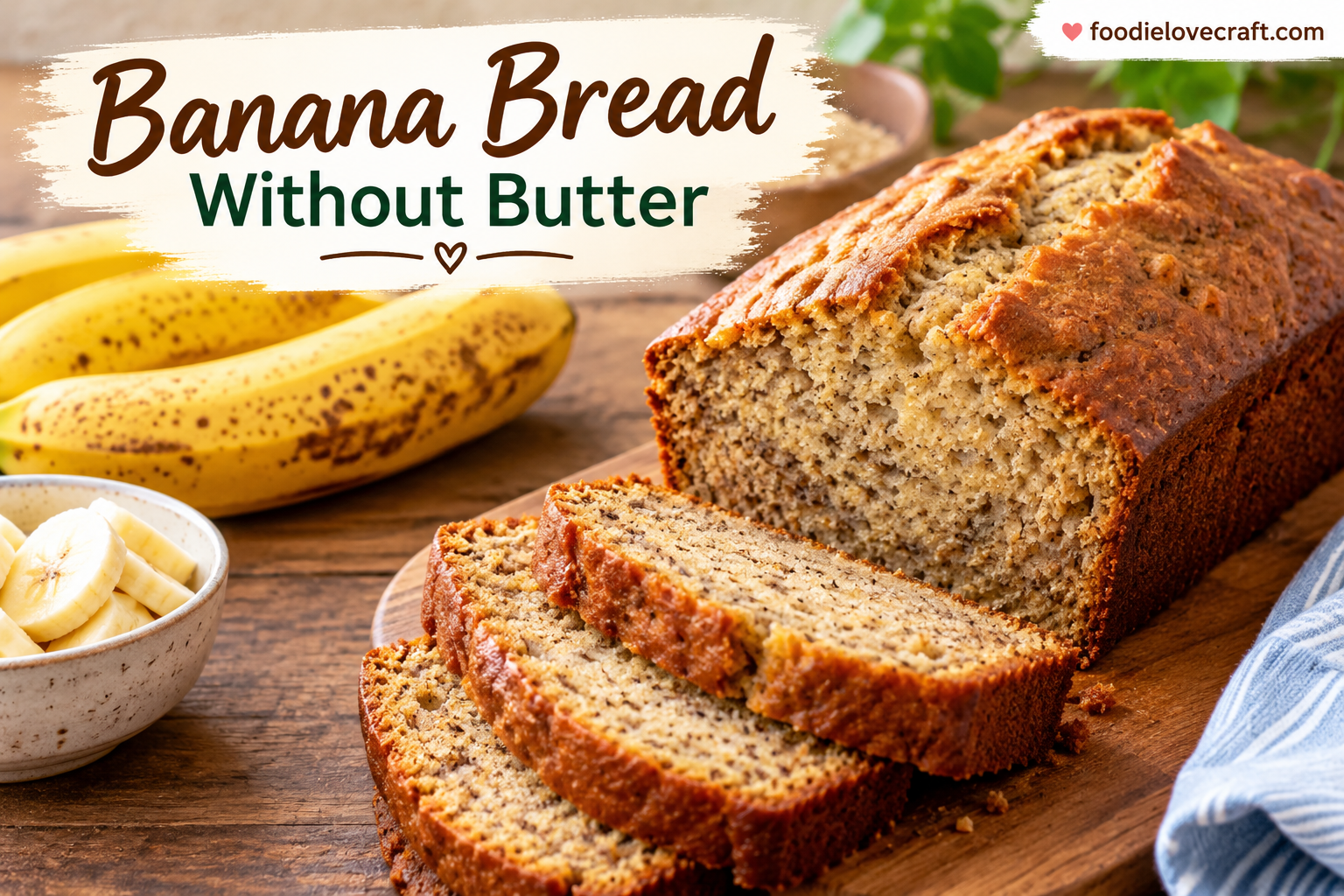
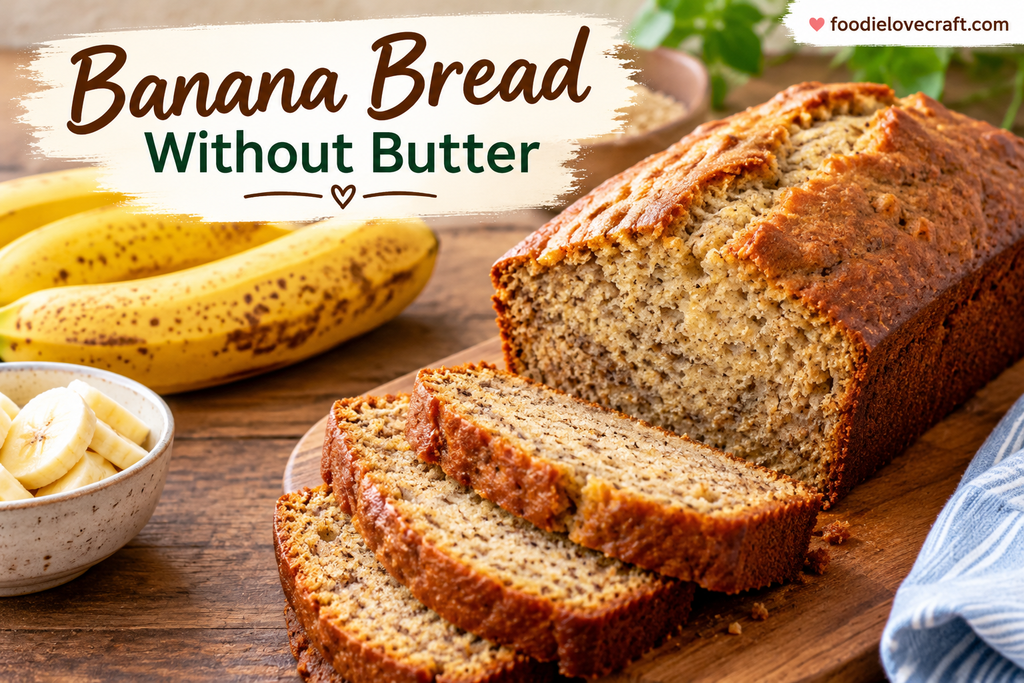
If you have a few overripe bananas sitting on your kitchen counter, don’t throw them away. They are perfect for making a soft, naturally sweet loaf of banana bread without butter.
This easy banana bread recipe uses simple ingredients that you probably already have in your kitchen. Instead of butter, it uses a small amount of neutral oil, which keeps the bread moist and tender without making it heavy. The result is a golden loaf with a soft center, lightly crisp edges, and plenty of delicious banana flavor.
One of the best things about this recipe is how simple it is. You don’t need a mixer, complicated equipment, or special baking skills. A bowl, a fork, a loaf pan, and a few basic ingredients are enough.
Whether you’re looking for a quick breakfast, an afternoon snack, or an easy way to use ripe bananas, this recipe is worth trying.
Why Make Banana Bread Without Butter?
There are plenty of reasons to make banana bread without butter. Sometimes you simply don’t have butter available, while other times you may prefer using oil in your baking.
Butter can give baked goods a rich flavor, but oil works beautifully in banana bread. Since oil remains liquid at room temperature, it can help create a soft and moist texture.
Bananas also contribute plenty of natural moisture and sweetness, so you don’t need an excessive amount of sugar.
This recipe is especially useful when you want:
- A simple banana bread recipe
- Banana bread without butter
- A moist and tender loaf
- An easy one-bowl dessert
- A recipe for using overripe bananas
- A quick homemade breakfast or snack
- A budget-friendly baking recipe
What Does Banana Bread Without Butter Taste Like?
You might wonder whether leaving out butter will change the flavor.
The short answer is yes, but not in a bad way.
Butter provides a rich, slightly creamy flavor. Oil has a more neutral taste, which allows the banana flavor to stand out. If you use very ripe bananas, the finished bread will have a naturally sweet and fragrant banana taste.
The texture is also wonderfully soft. In fact, many people prefer oil-based banana bread because it can remain moist for several days when stored properly.
For the best flavor, choose bananas that are heavily speckled or mostly brown. The riper the bananas, the sweeter and more flavorful your bread will be.
Ingredients You’ll Need
The ingredient list is short and uncomplicated.
Ripe Bananas
Use three medium-to-large ripe bananas. Bananas with brown spots are ideal because they are softer, sweeter, and more flavorful than yellow bananas.
All-Purpose Flour
Regular all-purpose flour works perfectly for this recipe. Measure it carefully so that you don’t accidentally add too much, which can make the bread dense.
Sugar
Granulated sugar adds sweetness. If your bananas are extremely ripe, you can slightly reduce the sugar according to your preference.
Neutral Oil
Since this is banana bread without butter, oil replaces the butter. Canola, vegetable, sunflower, or another mild-flavored oil can work well.
Eggs
Eggs help bind the ingredients together and contribute to the soft texture of the bread.
Baking Soda
Baking soda helps the bread rise and become lighter.
Vanilla Extract
A little vanilla adds warmth and makes the banana flavor even more pleasant.
Salt
Don’t skip the salt. Even a small amount helps balance the sweetness and brings out the other flavors.
Optional Add-Ins
You can keep the bread plain or add your favorite extras, such as:
- Chopped walnuts
- Pecans
- Chocolate chips
- Cinnamon
- Raisins
- Shredded coconut
How to Make Banana Bread Without Butter
The process is incredibly easy.
Step 1: Prepare the Oven
Preheat your oven to 350°F (175°C).
Grease a standard loaf pan lightly with oil or line it with parchment paper. Leaving a little parchment hanging over the sides makes it easier to lift the finished loaf from the pan.
Step 2: Mash the Bananas
Place your ripe bananas in a large mixing bowl.
Mash them using a fork until mostly smooth. A few small banana pieces are completely fine. In fact, they can add little pockets of banana flavor throughout the bread.
You don’t need to use a blender or food processor.
Step 3: Add the Wet Ingredients
Add the eggs, oil, sugar, and vanilla extract to the mashed bananas.
Whisk or stir everything together until well combined.
The mixture should look smooth and creamy.
Step 4: Add the Dry Ingredients
Add the flour, baking soda, and salt.
Gently stir until everything is just combined.
This is important: don’t overmix the batter.
A few small streaks or lumps of flour are better than stirring the batter too much. Overmixing can develop the gluten in the flour and make your banana bread chewy or dense instead of soft.
Step 5: Add Optional Ingredients
If you’re using walnuts, chocolate chips, cinnamon, or another addition, gently fold it into the batter.
Don’t add too many extras, though. Too many nuts or chocolate chips can make the loaf heavy.
Step 6: Pour Into the Pan
Transfer the batter into your prepared loaf pan.
Use a spatula to gently spread the batter into an even layer.
If you want, sprinkle a few chopped walnuts or chocolate chips over the top before baking.
Step 7: Bake
Place the pan in the preheated oven and bake for approximately 50–60 minutes.
The exact baking time can vary depending on your oven, the size of your loaf pan, and the moisture in your bananas.
Start checking around the 50-minute mark.
Insert a toothpick or thin skewer into the center. If it comes out mostly clean, with only a few moist crumbs, the banana bread is ready.
If the toothpick has wet batter on it, continue baking for several more minutes.
Step 8: Cool Before Slicing
Once baked, remove the loaf from the oven and allow it to cool in the pan for about 10–15 minutes.
Then carefully transfer it to a wire rack.
Try not to slice it immediately. I know it’s tempting when the kitchen smells amazing, but allowing the bread to cool gives the crumb time to set.
Once slightly cooled, slice and serve.
Tips for Making the Best Banana Bread Without Butter
A few small details can make a big difference.
Use Very Ripe Bananas
This is probably the most important tip.
Green or barely ripe bananas won’t provide the same sweetness or banana flavor. Look for bananas with plenty of brown spots.
If the bananas are almost completely brown and soft, that’s even better.
Don’t Overmix the Batter
Once you add the flour, mix only until the ingredients are combined.
Overmixing is one of the easiest ways to end up with dense banana bread.
Measure Flour Correctly
Too much flour can make your loaf dry.
If possible, use a kitchen scale. If you’re measuring with cups, gently spoon the flour into the measuring cup and level the top rather than packing the flour down.
Don’t Overbake
Banana bread should be moist, not dry.
Start checking it toward the end of the recommended baking time. Once a toothpick comes out with a few moist crumbs, you can take it out.
Remember that the bread will continue cooking slightly from the residual heat as it cools.
Can I Make Banana Bread Without Butter and Without Oil?
Yes, you can make banana bread without both butter and oil, although the texture will be somewhat different.
Mashed banana and ingredients such as applesauce or yogurt can provide moisture. However, fat contributes to the soft, tender texture that many people expect from banana bread.
If you’re simply out of butter, replacing it with a neutral oil is one of the easiest solutions.
Can I Use Frozen Bananas?
Absolutely.
Frozen bananas are excellent for banana bread.
When bananas become too ripe to eat, peel them and place them in an airtight freezer-safe container or bag. When you’re ready to bake, allow them to thaw.
Frozen bananas may release quite a bit of liquid as they thaw. This is normal. Add the bananas and their juices to the recipe.
Because frozen bananas can be particularly soft and watery, make sure you measure the mashed bananas reasonably accurately.
Can I Add Chocolate Chips?
Definitely.
Chocolate chips and bananas are a classic combination.
For a standard loaf, about ½ to 1 cup of chocolate chips is usually plenty. Fold them into the batter just before transferring it to the loaf pan.
You can also sprinkle a few extra chocolate chips over the top before baking.
For a slightly more grown-up flavor, try dark chocolate chips.
Can I Add Nuts?
Yes. Walnuts and pecans are especially delicious in banana bread.
Toast the nuts beforehand if you want a deeper, richer flavor. Let them cool before chopping and adding them to the batter.
If you’re serving the bread to guests, remember to mention that it contains nuts.
How to Store Banana Bread
Proper storage helps keep your banana bread soft.
Once completely cool, wrap the loaf tightly in plastic wrap or place it in an airtight container.
At room temperature, it can generally stay fresh for a few days.
If your kitchen is particularly warm or humid, storing it in the refrigerator can help extend its shelf life, although refrigeration can make the bread slightly firmer.
For longer storage, freeze individual slices or the entire loaf.
How to Freeze Banana Bread
Banana bread freezes surprisingly well.
Allow the loaf to cool completely before freezing.
You can wrap the entire loaf tightly in plastic wrap and then place it inside a freezer-safe bag or container.
For easier serving, slice the bread first. Wrap each slice individually and freeze them together in a sealed freezer bag.
When you want a slice, simply let it thaw at room temperature or warm it gently.
This is especially convenient when you want a quick homemade breakfast without baking an entire loaf from scratch.
Ways to Serve Banana Bread
There are so many ways to enjoy homemade banana bread.
Serve a warm slice with:
- Peanut butter
- Almond butter
- Honey
- Greek yogurt
- Fresh berries
- Chopped nuts
- A little cinnamon
- Chocolate spread
It’s delicious on its own with a cup of coffee or tea.
For breakfast, pair it with fruit and yogurt. For an afternoon snack, warm a slice for a few seconds and enjoy it with your favorite hot drink.
You can even turn leftover banana bread into French toast for a weekend breakfast.
Common Mistakes to Avoid
Even though this is an easy recipe, a few mistakes can affect the final result.
Using Underripe Bananas
The bread won’t have as much sweetness or banana flavor.
Adding Too Much Flour
This can result in a dry and heavy loaf.
Overmixing
Mixing the batter too much can make the bread tough.
Cutting It Too Soon
Freshly baked banana bread needs time to cool and set.
Baking at the Wrong Temperature
An oven that is too hot may brown the outside before the center is fully baked.
An oven thermometer can be useful if you regularly bake and want more consistent results.
Why This Recipe Is Great for Busy Days
One of the biggest advantages of this banana bread without butter recipe is its simplicity.
There are no complicated techniques. You don’t need to cream butter and sugar together, and you don’t need an electric mixer.
Everything can be prepared in one bowl.
That means less preparation, less cleanup, and more time to enjoy your freshly baked bread.
It’s also an excellent recipe for using bananas that are past their prime. Instead of throwing them away, you can turn them into something comforting and delicious.
Frequently Asked Questions
What can I use instead of butter in banana bread?
Neutral-flavored oil is one of the easiest substitutes. Canola, vegetable, and sunflower oil are good choices because they don’t overpower the banana flavor.
Why is my banana bread dry?
Too much flour, overbaking, or using bananas that aren’t ripe enough can result in dry banana bread. Measure your flour carefully and check the loaf toward the end of the baking time.
Why did my banana bread sink in the middle?
A loaf can sink if the center hasn’t fully baked, if there is too much moisture, or if the batter is overmixed. Make sure the center is properly baked before removing the loaf from the oven.
Can I make this recipe with whole wheat flour?
Yes, but the texture will be denser and the flavor slightly nuttier. For a softer loaf, you can replace only part of the all-purpose flour with whole wheat flour.
How many bananas should I use?
Three medium-to-large ripe bananas work well for a standard loaf. The exact amount can vary depending on their size, so measuring the mashed banana can help produce consistent results.
Final Thoughts
Making banana bread without butter is a simple way to create a soft, flavorful homemade loaf using everyday ingredients.
The ripe bananas provide natural sweetness and plenty of banana flavor, while neutral oil keeps the bread tender and moist. The recipe requires no complicated equipment and can be mixed together in just one bowl.
Whether you’re baking for your family, looking for a quick breakfast, or simply trying to use up a bunch of overripe bananas, this recipe is an easy one to keep in your collection.
The best part is that you can make it your own. Add walnuts for crunch, chocolate chips for a sweeter treat, cinnamon for warmth, or simply enjoy the classic banana flavor on its own.
So, the next time you see those spotted bananas sitting on your counter, don’t throw them away. Grab a mixing bowl and turn them into a homemade loaf of delicious, moist banana bread.