
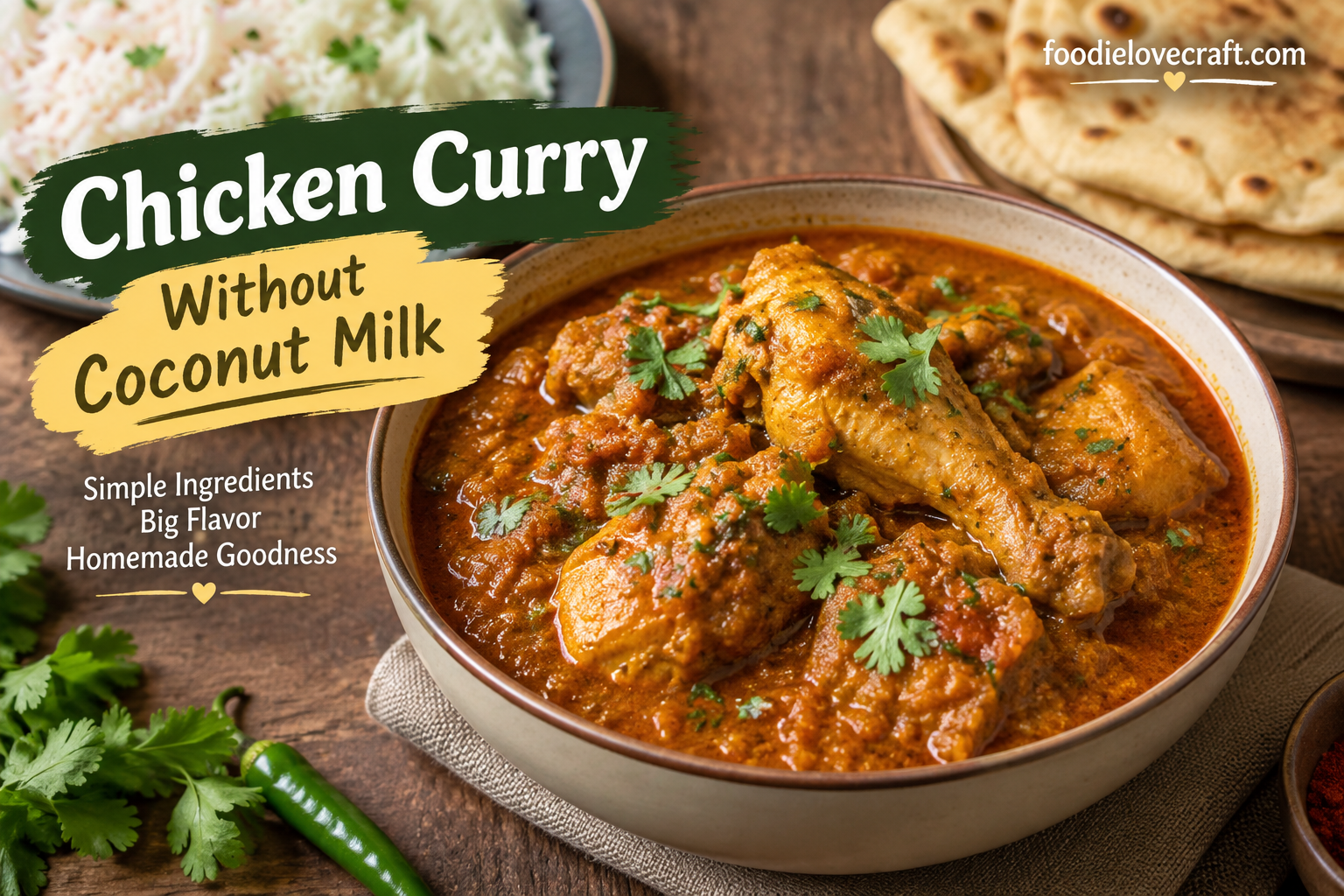
If you love a rich, comforting chicken curry but don’t have coconut milk in your kitchen, don’t worry. You can make a delicious chicken curry without coconut milk using simple pantry ingredients. This version is full of warm spices, tender chicken, onions, tomatoes, garlic, and ginger, creating a flavorful gravy without relying on coconut milk.
The best thing about this recipe is its flexibility. You can make it mild or spicy, thick or saucy, depending on your preference. It is perfect for a quick weeknight dinner, family meal, or weekend comfort food.
In this guide, you’ll learn how to make chicken curry without coconut milk from scratch, what ingredients you need, helpful cooking tips, serving ideas, storage instructions, and easy ways to customize the recipe.
Why Make Chicken Curry Without Coconut Milk?
There are plenty of reasons to make chicken curry without coconut milk. Maybe you don’t have coconut milk available, don’t enjoy its slightly sweet flavor, or simply want a more traditional tomato-and-spice-based curry.
Without coconut milk, the curry can have a lighter and more savory flavor. Onions and tomatoes create the base, while ginger, garlic, cumin, coriander, turmeric, and garam masala provide warmth and depth.
Another advantage is that you can easily adjust the consistency. If you prefer a thick curry, cook it uncovered until excess liquid evaporates. For a thinner gravy, simply add a little more water or chicken stock.
Ingredients for Chicken Curry Without Coconut Milk
You don’t need complicated ingredients to make this curry. Most of the ingredients are probably already in your pantry.
For the Chicken
- 1 ½ pounds boneless or bone-in chicken
- 2 tablespoons cooking oil
- 1 medium onion, finely chopped
- 3 cloves garlic, minced
- 1 tablespoon fresh ginger, grated
- 2 medium tomatoes, chopped or pureed
- 1 cup water or chicken stock
Spices
- 1 teaspoon ground cumin
- 1 teaspoon ground coriander
- ½ teaspoon turmeric powder
- 1 teaspoon paprika
- ½ to 1 teaspoon chili powder
- 1 teaspoon garam masala
- ½ teaspoon black pepper
- Salt to taste
Optional Ingredients
You can also add:
- ½ cup plain yogurt
- 1 green chili
- 1 small cinnamon stick
- 2 cardamom pods
- 2 cloves
- Fresh cilantro
- 1 tablespoon lemon juice
The yogurt is optional, but it can make the curry creamy and add a pleasant tang without using coconut milk.
How to Make Chicken Curry Without Coconut Milk
Making this curry is surprisingly simple. The key is to give the onions, spices, and tomatoes enough time to cook properly.
Step 1: Prepare the Chicken
Start by cutting the chicken into evenly sized pieces if you’re using boneless chicken. Pat the pieces dry with paper towels.
If you’re using bone-in chicken, you can leave the pieces as they are. Bone-in chicken often adds extra flavor to the curry and tends to stay juicy during cooking.
Season the chicken lightly with salt and set it aside while you prepare the curry base.
Step 2: Cook the Onion
Heat the oil in a large skillet, Dutch oven, or heavy-bottomed pot over medium heat.
Add the chopped onion and cook for about 6 to 8 minutes. Stir occasionally until the onion becomes soft and lightly golden.
Don’t rush this step. Properly cooked onions provide sweetness and depth to the curry.
Step 3: Add Ginger and Garlic
Add the minced garlic and grated ginger to the onions.
Cook for about 30 to 60 seconds, stirring constantly. You should be able to smell the ginger and garlic as they become fragrant.
Be careful not to burn the garlic because burnt garlic can make the entire curry taste bitter.
Step 4: Add the Spices
Now add cumin, coriander, turmeric, paprika, chili powder, black pepper, and a little salt.
Stir the spices into the onion mixture.
Cook them for approximately 30 seconds. This short step helps release the natural aroma of the spices and gives the curry a deeper flavor.
Step 5: Add the Tomatoes
Add the chopped or pureed tomatoes.
Stir everything together and cook over medium heat for around 7 to 10 minutes.
The tomato mixture should become thicker and darker, and the oil may begin to separate slightly around the edges.
This is an important stage because properly cooked tomatoes help create a rich curry rather than a watery sauce.
Step 6: Add the Chicken
Add the chicken pieces to the tomato and spice mixture.
Stir well so every piece is coated with the curry base.
Cook for approximately 5 to 7 minutes, stirring occasionally, until the outside of the chicken is no longer raw.
Step 7: Add Water or Chicken Stock
Pour in about 1 cup of water or chicken stock.
If you’re using bone-in chicken, you may need slightly more liquid depending on the size of the pieces and the type of pot you’re using.
Bring the curry to a gentle boil.
Step 8: Simmer the Curry
Reduce the heat to low and cover the pot.
Allow the chicken to simmer for approximately 15 to 25 minutes, depending on the size and type of chicken pieces.
Stir occasionally.
If the curry becomes too thick before the chicken is cooked, add a small amount of water.
If the curry is too thin once the chicken is cooked, remove the lid and simmer for several additional minutes.
Step 9: Finish With Garam Masala
Once the chicken is cooked through, add garam masala.
Taste the curry and adjust the salt and chili according to your preference.
For a fresh, slightly tangy finish, you can add a small squeeze of lemon juice.
Garnish with chopped fresh cilantro before serving.
Can You Make Chicken Curry Without Coconut Milk Creamy?
Absolutely.
Coconut milk isn’t the only ingredient that can make a curry creamy. If you want a richer texture, there are several alternatives.
Plain Yogurt
Plain yogurt is one of the easiest substitutes. Add about ½ cup of whisked yogurt near the end of cooking.
To prevent the yogurt from curdling, reduce the heat and add it gradually while stirring.
Heavy Cream
A small amount of heavy cream can give the curry a smooth and luxurious texture. Add it toward the end of cooking.
Cashew Paste
For a naturally creamy curry, soak a small handful of cashews in warm water and blend them into a smooth paste.
Stir the paste into the curry during the final stage of cooking.
Extra Tomato and Onion
You don’t actually need dairy or nuts to create a satisfying curry. Cooking the onions and tomatoes properly and allowing the sauce to reduce can create a naturally thick texture.
What Chicken Is Best for This Curry?
Both boneless and bone-in chicken work well.
Boneless chicken thighs are particularly good because they remain tender and flavorful during cooking.
Chicken breast is also suitable, especially if you prefer lean meat. However, avoid overcooking it because it can become dry.
Bone-in chicken gives the curry a deeper flavor and is an excellent choice when you want a traditional homemade-style curry.
If using chicken breast, cut it into relatively large pieces so it doesn’t dry out during simmering.
How to Make Chicken Curry More Flavorful
The secret to great curry isn’t necessarily using dozens of spices. It’s about how you cook the ingredients.
First, don’t rush the onions. Letting them soften and lightly brown creates a flavorful foundation.
Second, cook the tomatoes until they lose their raw taste. This can make a noticeable difference.
Third, bloom the spices briefly in the oil. This helps release their aroma.
Finally, give the chicken enough time to simmer gently in the sauce. This allows the flavors to come together.
Fresh ginger, garlic, cilantro, and lemon juice can also add brightness to the finished dish.
How Spicy Should Chicken Curry Be?
The spice level is completely up to you.
For a mild chicken curry, use paprika and just a small amount of chili powder.
For medium heat, use around ½ to 1 teaspoon of chili powder and add a chopped green chili.
For a hot curry, increase the chili powder or add fresh hot chilies.
Remember that different chili powders have different heat levels, so it’s better to start with less and add more later.
What to Serve With Chicken Curry
One of the best things about chicken curry is how many side dishes work with it.
Steamed Rice
Plain steamed white rice is a simple choice. The rice absorbs the flavorful curry sauce and balances the spices.
Basmati Rice
Fragrant basmati rice is another excellent option, especially for a special dinner.
Naan
Warm naan is perfect for scooping up thick curry and makes the meal feel especially satisfying.
Roti
For a lighter everyday meal, serve the curry with homemade roti or another flatbread.
Jeera Rice
Cumin rice adds another layer of flavor without overpowering the chicken curry.
Fresh Salad
A simple cucumber, tomato, and onion salad can provide a refreshing contrast to the warm spices.
How to Store Chicken Curry
If you have leftovers, allow the curry to cool slightly before transferring it to an airtight container.
Store it in the refrigerator and use it within a few days.
Chicken curry can also be frozen. Place completely cooled curry in a freezer-safe container and leave a little room for expansion.
When you’re ready to eat it, thaw it safely and reheat it thoroughly on the stove or in the microwave.
If the curry becomes too thick after refrigeration, add a splash of water while reheating.
Can You Freeze Chicken Curry Without Coconut Milk?
Yes, this chicken curry freezes well.
In fact, the flavor can become even better after resting because the spices have more time to blend together.
For the best texture, freeze the curry without fresh cilantro and lemon juice. Add those ingredients after reheating.
If you plan to freeze several portions, divide the curry into individual containers. This makes it easier to thaw only what you need.
Common Mistakes to Avoid
Rushing the Onions
Undercooked onions can leave the curry tasting harsh. Give them enough time to soften and develop some color.
Burning the Spices
Spices can burn quickly when exposed to high heat. Keep the heat moderate and stir frequently.
Adding Too Much Water
It’s easier to thin a curry than to fix a watery one. Start with a moderate amount of liquid and add more if needed.
Overcooking Chicken Breast
Chicken breast doesn’t need a very long cooking time. Keep an eye on it to prevent dryness.
Not Tasting Before Serving
Always taste the curry near the end. You may need more salt, chili, lemon juice, or garam masala.
Easy Variations
One of the great things about this chicken curry without coconut milk recipe is that you can easily change it based on what you have available.
Potato Chicken Curry
Add peeled, cubed potatoes along with the chicken. You may need additional water because potatoes absorb liquid as they cook.
Spinach Chicken Curry
Stir fresh spinach into the curry during the final few minutes. It adds color and extra vegetables.
Yogurt Chicken Curry
Add plain yogurt near the end for a creamy, tangy curry without coconut milk.
Vegetable Chicken Curry
Add vegetables such as peas, carrots, bell peppers, or cauliflower for a complete one-pot meal.
Lemon Chicken Curry
Increase the lemon juice slightly at the end for a brighter, tangier flavor.
Frequently Asked Questions
Can I make chicken curry without coconut milk?
Yes. Chicken curry can be made with onions, tomatoes, spices, water or stock, and chicken. Coconut milk is optional and isn’t required for a flavorful curry.
What can I use instead of coconut milk in chicken curry?
Plain yogurt, heavy cream, cashew paste, chicken stock, or simply extra tomato and onion can be used depending on the desired texture and flavor.
Is chicken curry without coconut milk healthy?
It can be part of a balanced meal. The nutritional content depends on the ingredients and portion size. Using moderate amounts of oil and serving the curry with vegetables can help create a balanced meal.
Can I use chicken breast?
Yes. Chicken breast works well, but it should not be overcooked because it can become dry. Chicken thighs are more forgiving and remain tender.
Can I make this curry dairy-free?
Yes. Simply leave out yogurt and cream. The curry is delicious with a tomato-and-onion base alone.
Can I make chicken curry ahead of time?
Yes. Chicken curry can be prepared ahead and refrigerated. Reheat it gently before serving. The flavors often become more developed after resting.
Why is my chicken curry watery?
The curry may contain too much liquid or may not have simmered long enough. Remove the lid and allow it to cook gently until the sauce reaches your preferred consistency.
How do I thicken chicken curry without coconut milk?
Simmer the curry uncovered to reduce the liquid. You can also add yogurt, cashew paste, or a small amount of tomato puree depending on the recipe.
Final Thoughts
Making chicken curry without coconut milk is easy, affordable, and surprisingly flavorful. You don’t need coconut milk to create a rich and satisfying curry. A good combination of slowly cooked onions, ripe tomatoes, ginger, garlic, and aromatic spices can create a delicious sauce that coats every piece of chicken.
The recipe is also easy to adapt. Add yogurt for creaminess, potatoes for a heartier meal, spinach for extra vegetables, or more chili if you enjoy heat. Serve it with rice, naan, roti, or your favorite side dish for a comforting homemade dinner.
Once you’ve made this version, you’ll see that coconut milk is simply one possible ingredient—not a requirement—for a great chicken curry.