
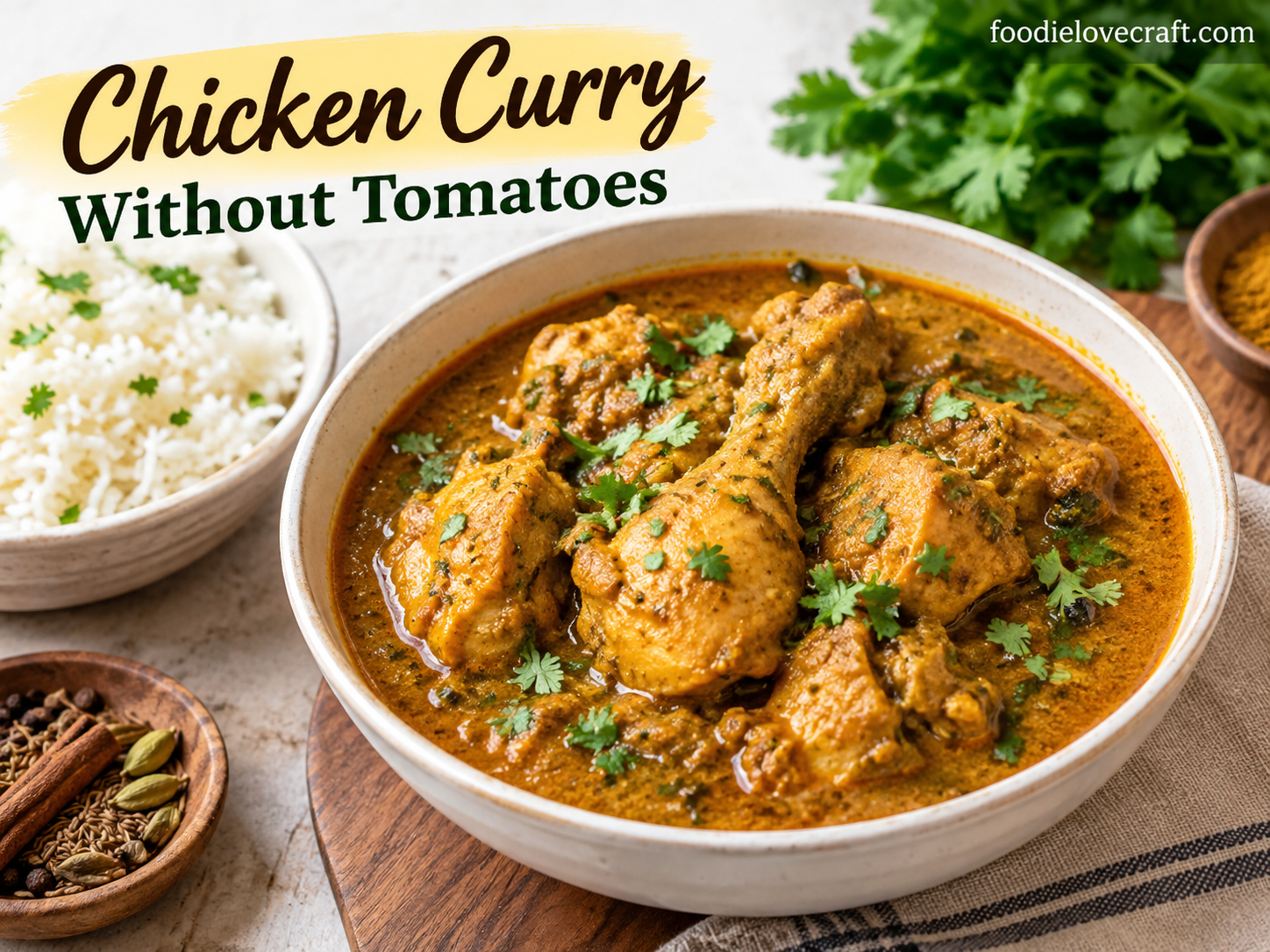
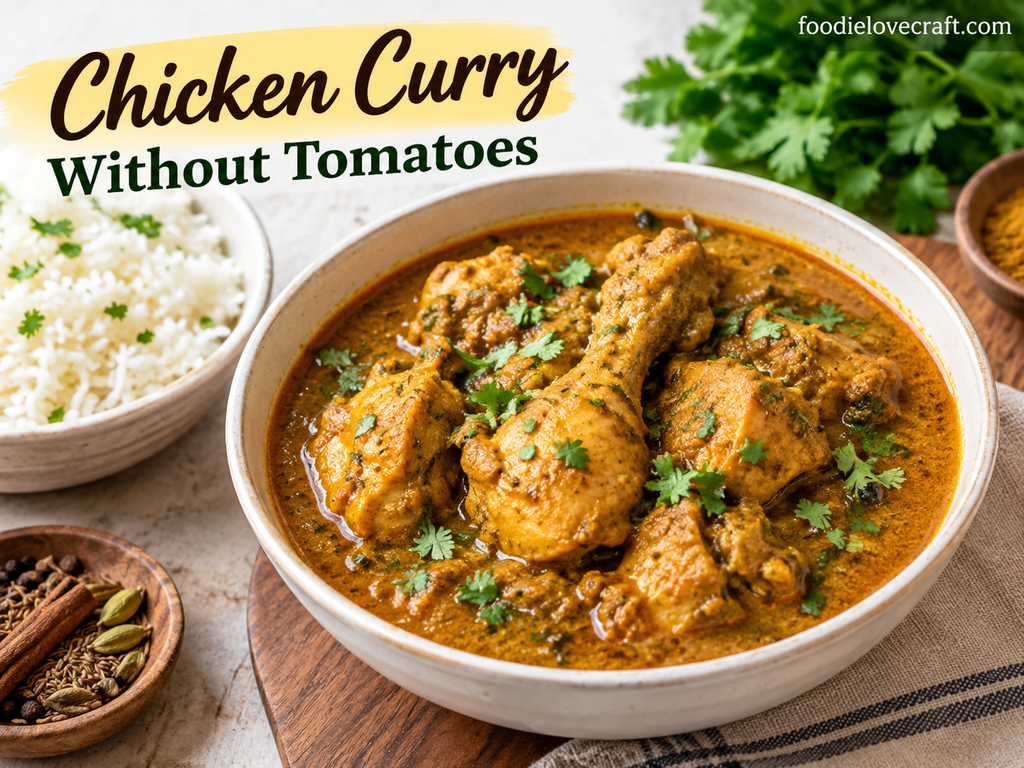
If you love a warm, flavorful chicken curry but don’t have tomatoes on hand—or simply prefer a curry without their tangy flavor—this chicken curry without tomatoes is an easy recipe to try. It is rich, aromatic, comforting, and made with simple ingredients that you may already have in your kitchen.
Tomatoes are commonly used in many chicken curry recipes to add acidity, moisture, and a slightly sweet-tart flavor. But they are not essential for making a delicious curry. With the right combination of onions, spices, garlic, ginger, and a few simple cooking techniques, you can make a deeply flavorful chicken curry without tomatoes.
This recipe is especially useful when you want a quick homemade dinner using pantry staples. The chicken becomes tender while cooking in a fragrant onion-based gravy, and the spices create plenty of flavor without needing tomato paste, canned tomatoes, or fresh tomatoes.
Whether you serve it with steamed rice, naan, roti, or paratha, this easy chicken curry without tomatoes makes a satisfying family meal.
Why Make Chicken Curry Without Tomatoes?
There are plenty of reasons to make a tomato-free chicken curry. Sometimes you simply run out of tomatoes while cooking. Other times, you may prefer a curry with a richer onion and spice base instead of the acidity tomatoes provide.
Leaving tomatoes out also gives you an opportunity to experiment with different flavors. Onions can be slowly cooked until golden, creating natural sweetness and depth. Ginger, garlic, cumin, coriander, turmeric, and garam masala add warmth and aroma.
Another advantage is that you can easily adjust the gravy according to your preference. You can make it thick and rich for serving with naan, or add more water to create a lighter curry that pairs beautifully with rice.
The result is a comforting dish that proves you don’t need tomatoes to make a flavorful homemade chicken curry.
Ingredients for Chicken Curry Without Tomatoes
You don’t need a long list of unusual ingredients for this recipe. Most of the flavor comes from everyday spices and aromatics.
Chicken
Use about 1 ½ to 2 pounds of chicken. Bone-in chicken pieces are excellent if you want a flavorful curry because the bones add richness to the gravy. Boneless chicken thighs are another good choice because they stay tender and juicy.
You can also use boneless chicken breast, but take care not to overcook it because breast meat can become dry.
Onions
Onions form the foundation of this tomato-free curry. Use two medium or large onions, finely sliced or chopped.
Cooking the onions patiently is important. They should become soft and golden rather than remaining raw or pale. Well-cooked onions provide sweetness, body, and depth to the curry.
Ginger and Garlic
Fresh ginger and garlic give the curry its characteristic savory aroma. You can use freshly minced ginger and garlic or a homemade ginger-garlic paste.
Fresh ingredients generally provide a brighter flavor, but prepared paste works perfectly when you want to save time.
Cooking Oil
A neutral cooking oil works well. You can also use ghee for a richer flavor. Using a combination of oil and a small amount of ghee can give the curry a particularly pleasant aroma.
Spices
For a flavorful chicken curry without tomatoes, you can use:
- Turmeric powder
- Red chili powder
- Ground cumin
- Ground coriander
- Garam masala
- Salt
- Black pepper, if desired
Whole spices such as cumin seeds, cinnamon, cardamom, cloves, and bay leaf can also be added at the beginning of cooking.
Yogurt
Plain yogurt can be used to add creaminess and a mild tang to the curry. It is particularly useful in a tomato-free recipe because it provides some of the acidity that tomatoes normally contribute.
Make sure the yogurt is at room temperature and add it gradually over low heat to help prevent curdling.
Water
Water creates the gravy and allows the chicken to cook gently. Add more or less depending on how thick you want your curry.
Fresh Cilantro
Fresh cilantro added at the end gives the dish a fresh herbal flavor and makes the curry look more appetizing.
How to Make Chicken Curry Without Tomatoes
The cooking process is simple, but taking your time with a few steps makes a big difference.
Step 1: Prepare the Chicken
Clean and pat the chicken dry. If you’re using large pieces, you can make a few shallow cuts in the meat so the spices can penetrate more easily.
Season the chicken lightly with salt and a little turmeric. Set it aside while you prepare the curry base.
Step 2: Heat the Oil
Place a large heavy-bottomed pan or Dutch oven over medium heat. Add the cooking oil.
If you’re using whole spices, add them once the oil is hot. Cumin seeds, bay leaf, cinnamon, cardamom, and cloves can all work beautifully.
Allow the spices to sizzle for a few seconds. This releases their natural oils and creates the aromatic foundation of the curry.
Step 3: Cook the Onions
Add the chopped or sliced onions and stir well.
This is one of the most important steps when making chicken curry without tomatoes. Cook the onions over medium heat until they become soft and golden brown.
Avoid turning the heat too high. Burned onions can make the curry bitter, while undercooked onions may leave the gravy with a raw flavor.
If the onions start sticking to the bottom, add a small splash of water and continue cooking.
Step 4: Add Ginger and Garlic
Once the onions are golden, add the ginger and garlic.
Cook for about one to two minutes, stirring continuously. You should notice a wonderful aroma as the raw smell disappears.
Step 5: Add the Ground Spices
Lower the heat and add turmeric, chili powder, cumin, and coriander powder.
You can add a small splash of water at this stage to create a spice paste. This prevents the dry spices from burning and helps them blend evenly with the onions.
Cook the spices for a minute or two.
Step 6: Add the Chicken
Add the chicken pieces to the pan and stir thoroughly so every piece is coated with the onion and spice mixture.
Cook the chicken for several minutes, stirring occasionally. This process, often called bhunao, helps develop a deeper flavor.
Don’t rush this stage. Allowing the chicken to cook with the spices before adding the liquid gives the curry a much richer taste.
Step 7: Add Yogurt
If you’re using yogurt, lower the heat.
Add the yogurt gradually while stirring continuously. This helps it blend into the curry without separating.
Cook until the yogurt is incorporated and the mixture becomes thick and glossy.
Step 8: Add Water and Simmer
Add enough water to create your desired amount of gravy.
Bring the curry to a gentle simmer, then cover the pan.
Cook until the chicken is completely tender. Bone-in chicken may take longer than boneless pieces.
Stir occasionally and check the consistency. If the gravy becomes too thick before the chicken is cooked, add a little more water.
Step 9: Finish With Garam Masala
When the chicken is cooked and the gravy has reached your preferred consistency, add garam masala.
You can also add a small amount of freshly ground black pepper for extra warmth.
Simmer for another two or three minutes, then turn off the heat.
Step 10: Garnish and Serve
Finish the curry with freshly chopped cilantro.
Allowing the curry to rest for a few minutes before serving gives the flavors a chance to settle.
Your homemade chicken curry without tomatoes is now ready.
How to Make the Curry More Flavorful
The secret to a delicious tomato-free chicken curry isn’t adding dozens of ingredients. It’s about using the ingredients properly.
First, don’t rush the onions. Golden, well-cooked onions create a flavorful base that replaces some of the richness and complexity normally provided by tomatoes.
Second, cook the spices properly. Spices should be toasted gently in the oil and combined with the onion mixture, but they should never be allowed to burn.
Third, give the chicken enough time to cook with the spices before adding plenty of water. This helps the flavors cling to the chicken instead of producing a watery gravy.
Finally, use fresh ginger, garlic, and cilantro whenever possible. These simple ingredients can make a noticeable difference.
Can You Make Chicken Curry Without Tomatoes and Yogurt?
Yes. If you don’t have tomatoes or yogurt, you can still make a tasty chicken curry.
For a simple dairy-free version, focus on slowly caramelized onions, ginger, garlic, and spices. You can also add coconut milk if you enjoy a creamy curry, although coconut milk will give the dish a completely different flavor.
Another option is to use a small amount of lemon juice near the end of cooking. Add it gradually and taste as you go. Lemon provides acidity and can brighten the curry without using tomatoes.
Can You Use Boneless Chicken?
Absolutely.
Boneless chicken thighs are particularly good for this recipe because they remain tender and flavorful during simmering. Boneless chicken breast can also be used, especially if you prefer lean meat.
Because breast meat cooks more quickly, avoid simmering it for longer than necessary. Overcooking can make it dry.
If using boneless chicken, cut it into evenly sized pieces so everything cooks at approximately the same rate.
How to Make a Creamy Chicken Curry Without Tomatoes
For a richer version, add a few tablespoons of heavy cream toward the end of cooking.
You can also use yogurt for a lighter creamy texture. Another possibility is coconut milk, which works particularly well with warm spices.
If using cream, keep the heat low after adding it and avoid boiling the curry aggressively.
A creamy tomato-free chicken curry is delicious with naan, basmati rice, or homemade flatbread.
What to Serve With Chicken Curry
This curry is versatile enough to pair with many side dishes.
Steamed Rice
Simple steamed white rice is one of the easiest choices. The mild rice absorbs the flavorful gravy beautifully.
Basmati Rice
Fragrant basmati rice makes the meal feel a little more special. You can serve plain basmati rice or prepare a simple cumin rice.
Naan
Warm naan is perfect for scooping up thick chicken curry. Garlic naan is especially delicious with a rich, spiced gravy.
Roti
For an everyday family meal, serve the curry with homemade roti or chapati.
Paratha
Flaky paratha adds richness and works especially well with a thick onion-based curry.
Fresh Salad
A simple cucumber and onion salad can provide a refreshing contrast to the warm spices in the curry.
Tips for the Best Chicken Curry Without Tomatoes
Use bone-in chicken for extra flavor. Bones can add depth to the curry while it simmers.
Cook the onions properly. This is one of the most important secrets to a tomato-free curry.
Don’t burn the spices. Add a splash of water if necessary when cooking powdered spices.
Use room-temperature yogurt. Cold yogurt is more likely to separate when added to a hot pan.
Don’t add too much water at once. You can always add more, but reducing an overly watery curry takes longer.
Taste before serving. Adjust salt, chili, and garam masala according to your preference.
Let the curry rest. A few minutes of resting can help the flavors come together.
Common Mistakes to Avoid
One common mistake is keeping the heat too high while cooking the onions. High heat can burn the outside while leaving the inside undercooked.
Another mistake is adding too much water. A curry with excessive water can taste diluted. Start with a moderate amount and add more only when necessary.
Adding yogurt directly from the refrigerator can also cause problems. Let it come closer to room temperature and stir it in gradually over low heat.
Finally, don’t add too much garam masala at the beginning. Garam masala is usually most effective when added toward the end, allowing its aromatic qualities to remain noticeable.
How to Store Leftover Chicken Curry
If you have leftovers, allow the curry to cool before transferring it to an airtight container.
Keep it refrigerated and use it within a few days. When reheating, warm it gently on the stovetop or in the microwave.
The curry may become thicker after refrigeration. Add a small splash of water while reheating and stir until it reaches the desired consistency.
In fact, many people find that chicken curry tastes even better the next day because the spices have had more time to blend.
Can You Freeze Tomato-Free Chicken Curry?
Yes, chicken curry generally freezes well.
Allow the curry to cool completely, then transfer it to a freezer-safe container. Leave a little space at the top because the contents can expand as they freeze.
Thaw it in the refrigerator before reheating when possible. Reheat gently and add a little water if the gravy has become too thick.
If you’ve added a large amount of cream or yogurt, the texture may change slightly after freezing and reheating, but the curry can still be enjoyable.
Frequently Asked Questions
What can I use instead of tomatoes in chicken curry?
Onions and yogurt are two excellent options. Yogurt adds mild acidity and creaminess, while properly cooked onions provide sweetness and body. Lemon juice can also be added toward the end for brightness.
Does chicken curry taste good without tomatoes?
Yes. Chicken curry can be extremely flavorful without tomatoes. The taste will be less tangy and can have a deeper onion-and-spice character.
Can I make chicken curry without tomatoes and onions?
Yes, although the flavor and texture will be different. You can build the curry using ginger, garlic, spices, yogurt, coconut milk, or other ingredients depending on the style you prefer.
How do I thicken chicken curry without tomatoes?
Cook the onions thoroughly and allow the curry to simmer uncovered near the end. Yogurt, cream, blended onions, or ground cashews can also help create a thicker gravy.
Can I make this chicken curry spicy?
Yes. Increase the amount of red chili powder or add fresh green chilies. It’s best to increase the heat gradually so you can control the final flavor.
What chicken is best for curry?
Bone-in chicken provides excellent flavor, while boneless chicken thighs are tender and easy to eat. Both work well for this recipe.
Final Thoughts
Making chicken curry without tomatoes is a great reminder that delicious curry doesn’t depend on one particular ingredient. With well-cooked onions, aromatic ginger and garlic, warm spices, tender chicken, and a little patience, you can create a rich and satisfying homemade meal.
The best part is how flexible this recipe can be. You can make it spicy or mild, thick or saucy, creamy or simple. Serve it with rice, naan, roti, or paratha and add a fresh salad on the side for a complete meal.
If you’ve ever opened the refrigerator and realized you don’t have tomatoes, don’t worry. You can still make an incredibly comforting chicken curry. In fact, once you try this version, you may find yourself making it even when tomatoes are available.
This easy chicken curry without tomatoes is perfect for weeknight dinners, family meals, weekend cooking, and anyone looking for a simple tomato-free curry that doesn’t sacrifice flavor.