
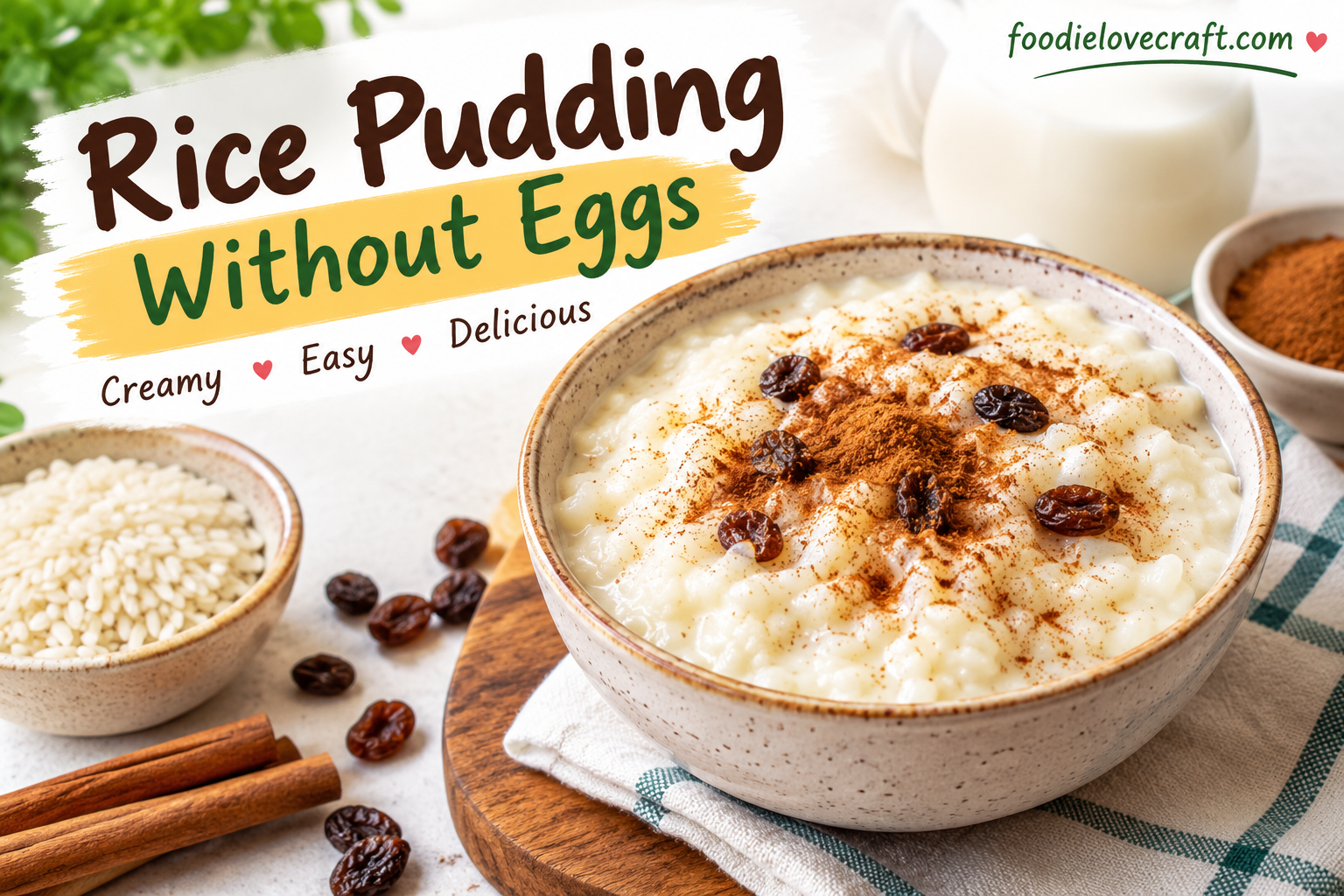
If you are looking for a simple dessert that is creamy, comforting, and made with everyday ingredients, rice pudding without eggs is a wonderful choice. This classic dessert proves that you do not need eggs to create a rich and satisfying pudding. With cooked rice, milk, sugar, and a little vanilla, you can make a delicious dessert that the whole family will enjoy.
Egg-free rice pudding is especially useful for people who avoid eggs, have run out of eggs, or simply prefer a lighter pudding. It is also an excellent way to use leftover cooked rice instead of throwing it away.
In this guide, you will learn how to make homemade rice pudding without eggs, which ingredients work best, how to make it extra creamy, and how to customize it with different flavors and toppings.
What Is Rice Pudding Without Eggs?
Rice pudding without eggs is a creamy dessert made by slowly cooking rice with milk and sugar until the mixture becomes thick and smooth. Unlike traditional custard-style rice pudding recipes, this version does not use eggs as a thickener.
The rice naturally releases some starch during cooking, which helps give the pudding a creamy texture. You can also add a small amount of cornstarch if you prefer a thicker consistency.
The best thing about this recipe is its simplicity. You do not need complicated ingredients or special equipment. A saucepan, spoon, and a handful of pantry staples are enough.
Why You Will Love This Egg-Free Rice Pudding
There are plenty of reasons to make rice pudding without eggs.
First, it is incredibly easy. You can prepare it using leftover cooked rice, which makes the recipe quick and convenient.
Second, the recipe is naturally comforting. Warm milk, soft rice, vanilla, and a touch of sweetness create a dessert that feels homemade and familiar.
Third, it is easy to customize. You can add cinnamon, cardamom, raisins, nuts, coconut, or even chocolate depending on your taste.
Another advantage is that you can serve it warm or chilled. Warm rice pudding is perfect during cooler weather, while cold rice pudding makes a refreshing dessert in summer.
Ingredients for Rice Pudding Without Eggs
You only need a few basic ingredients to prepare this easy dessert.
Cooked Rice
Use plain cooked white rice for the best results. Long-grain, medium-grain, or basmati rice can work well.
If you are using leftover rice, make sure it has been stored safely in the refrigerator and does not contain savory seasonings.
Milk
Whole milk gives the pudding a rich and creamy texture. However, you can use 2% milk or another milk of your choice.
For an extra creamy dessert, you can replace part of the milk with heavy cream.
Sugar
Regular granulated sugar works perfectly. Adjust the amount according to your preference.
You can also experiment with brown sugar for a deeper caramel-like flavor.
Vanilla Extract
Vanilla adds a warm, sweet aroma and makes the pudding taste more like a traditional dessert.
Cinnamon
Cinnamon is optional, but it adds a lovely warmth. You can stir some into the pudding or sprinkle it over the top before serving.
Salt
A small pinch of salt may seem unnecessary in a sweet dessert, but it helps balance the sweetness and bring out the other flavors.
Optional Cornstarch
If you want particularly thick eggless rice pudding, cornstarch can help. Mix it with a little cold milk before adding it to the saucepan to prevent lumps.
How to Make Rice Pudding Without Eggs
Making homemade rice pudding is straightforward. The most important thing is to cook it slowly and stir regularly.
Step 1: Gather Your Ingredients
Measure your cooked rice, milk, sugar, vanilla, and any optional flavorings before you begin.
Having everything ready makes the cooking process easier.
Step 2: Combine Rice and Milk
Place the cooked rice and milk in a medium saucepan.
Stir gently to combine. Start heating the mixture over medium heat.
Step 3: Add Sugar
Add the sugar and a small pinch of salt.
Stir until the sugar dissolves.
Step 4: Simmer Slowly
Reduce the heat to low and let the mixture simmer gently.
Stir frequently, especially around the bottom and sides of the pan. Slow cooking allows the rice to absorb some of the milk while releasing starch.
Continue cooking until the pudding becomes creamy and reaches your preferred consistency.
Step 5: Add Vanilla
Remove the saucepan from the heat and stir in the vanilla extract.
Adding vanilla near the end helps preserve its delicate aroma.
Step 6: Serve
Spoon the pudding into serving bowls.
You can enjoy it immediately while warm or refrigerate it for several hours if you prefer cold rice pudding.
Add cinnamon, chopped nuts, raisins, or another topping before serving.
Easy Rice Pudding Without Eggs Recipe
Here is a simple version you can save and make whenever you have leftover rice.
Ingredients:
- 2 cups cooked white rice
- 3 cups whole milk
- 1/3 to 1/2 cup granulated sugar
- 1 teaspoon vanilla extract
- 1/2 teaspoon ground cinnamon
- Pinch of salt
- 1 tablespoon cornstarch, optional
- 2 tablespoons raisins, optional
- Chopped nuts for serving, optional
Instructions:
- Add cooked rice and milk to a medium saucepan.
- Stir in sugar and salt.
- Cook over medium heat until the mixture begins to steam.
- Reduce the heat to low.
- Simmer for approximately 20 to 30 minutes, stirring regularly.
- If using cornstarch, mix it with a few tablespoons of cold milk until smooth, then stir it into the pudding.
- Continue cooking until the mixture thickens.
- Remove from the heat.
- Stir in vanilla and cinnamon.
- Add raisins if desired.
- Serve warm or refrigerate until chilled.
- Garnish with cinnamon or chopped nuts.
How to Make Rice Pudding Extra Creamy
The texture of rice pudding depends on the cooking method and ingredients.
For an especially creamy pudding, use whole milk rather than skim milk. The higher fat content gives the dessert a richer mouthfeel.
Cooking the pudding slowly is also important. High heat can cause the milk to scorch before the pudding develops the right consistency.
Stirring regularly helps prevent the rice from sticking to the bottom of the saucepan.
Another trick is to mash a small portion of the cooked rice against the side of the pan while stirring. This releases more starch and can naturally make the pudding creamier.
If you want a very thick consistency, add a small amount of cornstarch.
Remember that rice pudding also thickens as it cools, so do not cook it until it looks extremely thick in the saucepan.
Can You Make Rice Pudding With Leftover Rice?
Absolutely. In fact, leftover rice pudding without eggs is one of the easiest ways to transform leftover rice into a completely different dish.
Cooked rice that was refrigerated properly can be used to make a quick dessert.
Before using leftover rice, check that it has been stored safely and still smells and looks normal. Avoid using rice that has been left at room temperature for an extended period.
Using leftover rice also saves cooking time because the rice is already tender.
Rice Pudding Without Eggs With Basmati Rice
Basmati rice can give your pudding a delicious aroma.
Because basmati rice has long grains, the finished pudding may have a slightly different texture from pudding made with short-grain rice.
If you enjoy aromatic desserts, add a little ground cardamom along with the vanilla.
For a South Asian-inspired version, you can garnish the pudding with chopped pistachios, almonds, and a few raisins.
A tiny amount of saffron can also add beautiful color and fragrance.
Rice Pudding Without Eggs With Condensed Milk
Sweetened condensed milk can make rice pudding particularly rich and creamy.
If you use condensed milk, reduce the amount of regular sugar because condensed milk is already very sweet.
A simple combination of cooked rice, milk, condensed milk, vanilla, and cinnamon can produce a luxurious dessert with very little effort.
This version is especially useful when you want a richer pudding for a special occasion.
Dairy-Free Rice Pudding Without Eggs
You can also make dairy-free rice pudding without eggs.
Replace regular milk with your preferred plant-based milk. Almond milk, oat milk, coconut milk, and soy milk can all be used.
Coconut milk gives the pudding a particularly rich texture and adds a subtle tropical flavor.
For a dairy-free version, make sure your other ingredients, such as chocolate chips or toppings, are also suitable for your dietary needs.
Vegan Rice Pudding Without Eggs
Because this recipe does not require eggs, making it vegan is relatively easy.
Use plant-based milk instead of dairy milk and choose a suitable sweetener.
For example, coconut milk and maple syrup can create a delicious combination.
Add cinnamon, vanilla, and toasted coconut for a simple vegan dessert.
Flavor Variations
One of the best things about homemade rice pudding is how easy it is to change the flavor.
Cinnamon Rice Pudding
Add extra cinnamon and finish the pudding with a light dusting of cinnamon before serving.
Cardamom Rice Pudding
Add 1/4 to 1/2 teaspoon of ground cardamom for a fragrant dessert with a warm, aromatic flavor.
Raisin Rice Pudding
Stir raisins into the pudding during the final few minutes of cooking.
The raisins become soft and naturally sweet.
Coconut Rice Pudding
Use coconut milk or replace part of the regular milk with coconut milk.
Top with toasted coconut flakes.
Chocolate Rice Pudding
Add cocoa powder and a small amount of chocolate toward the end of cooking.
Stir until smooth.
Apple Cinnamon Rice Pudding
Cook finely diced apples with cinnamon separately and spoon them over the finished rice pudding.
This creates a dessert that tastes similar to apple pie and rice pudding combined.
Nutty Rice Pudding
Top your pudding with chopped almonds, walnuts, pecans, or pistachios.
For even more flavor, lightly toast the nuts before serving.
Common Mistakes to Avoid
Although rice pudding is easy to prepare, a few mistakes can affect the final result.
Cooking on High Heat
High heat can cause the milk to burn or stick to the bottom of the pan.
Keep the temperature low once the pudding begins to simmer.
Not Stirring Enough
Rice can settle at the bottom of the pan.
Stir regularly to prevent sticking and ensure even cooking.
Adding Too Much Sugar
The pudding can taste overly sweet if you add too much sugar at the beginning.
Start with a moderate amount and taste near the end. You can always add more sweetness.
Making It Too Thick
Remember that the pudding thickens as it cools.
If it looks slightly thinner than you want while hot, that is often perfectly fine.
Using Too Much Cornstarch
Cornstarch can make the pudding overly thick or give it a gummy texture.
Start with a small amount and only add more if necessary.
How to Store Rice Pudding
Allow the pudding to cool before transferring it to an airtight container.
Store it in the refrigerator and enjoy it within a few days.
Cold rice pudding will usually become thicker than it was when freshly cooked. If it becomes too thick, stir in a splash of milk before serving.
For food safety, avoid leaving cooked rice and milk dishes at room temperature for long periods.
Can You Freeze Eggless Rice Pudding?
Rice pudding can be frozen, although the texture may change slightly after thawing.
Milk-based puddings can sometimes separate during freezing and thawing.
If you decide to freeze it, place the pudding in a suitable airtight freezer container.
Thaw it in the refrigerator and stir thoroughly before reheating.
You may need to add a little milk to restore a smoother consistency.
How to Serve Rice Pudding Without Eggs
There are many ways to serve this simple dessert.
For a classic presentation, spoon warm pudding into small bowls and sprinkle cinnamon over the top.
For a more elegant dessert, garnish it with chopped pistachios, almonds, raisins, and a tiny amount of grated chocolate.
You can also serve chilled rice pudding with fresh berries or sliced bananas.
If you enjoy contrasting textures, add toasted nuts just before serving.
For special occasions, place the pudding into individual dessert glasses and garnish each portion separately.
Frequently Asked Questions
Can I make rice pudding without eggs?
Yes. Eggs are not necessary for making a creamy rice pudding. Cooked rice, milk, and sugar can create a delicious pudding without eggs.
What is the best rice for rice pudding?
Short- or medium-grain rice generally produces a creamy texture, but long-grain rice such as basmati can also work well.
Why is my rice pudding too thin?
It may need more cooking time. Simmer it gently for a little longer, stirring frequently. Remember that the pudding will also thicken as it cools.
Why is my rice pudding too thick?
Add a small splash of milk and stir until you reach the desired consistency.
Can I use leftover rice?
Yes. Leftover plain cooked rice works very well for this recipe and can significantly reduce preparation time.
Can I make this recipe dairy-free?
Yes. Replace dairy milk with plant-based milk such as oat, almond, soy, or coconut milk.
Does rice pudding need eggs to be creamy?
No. Eggs can create a custard-like texture, but rice starch and slow cooking can produce a naturally creamy pudding without eggs.
Can I add condensed milk?
Yes. Condensed milk makes the pudding richer and sweeter. Reduce the added sugar when using it.
Tips for the Best Rice Pudding Without Eggs
For the best results, keep these simple tips in mind:
- Use creamy whole milk for a richer texture.
- Cook the pudding slowly over low heat.
- Stir regularly to prevent sticking.
- Do not add too much cornstarch.
- Adjust sugar according to your taste.
- Add vanilla after removing the pudding from the heat.
- Remember that pudding thickens as it cools.
- Use properly refrigerated leftover rice.
- Add toppings immediately before serving for better texture.
- Experiment with cinnamon, cardamom, raisins, coconut, and nuts.
Final Thoughts
Rice pudding without eggs is proof that a delicious dessert does not have to be complicated. With simple ingredients and a little patience, you can turn cooked rice and milk into a creamy, satisfying treat.
Whether you use leftover rice, basmati rice, dairy-free milk, or your favorite toppings, this recipe is easy to adapt. Serve it warm for a comforting dessert or chill it in the refrigerator for a refreshing sweet treat.
The next time you have extra cooked rice in the refrigerator, instead of letting it go to waste, turn it into a bowl of homemade egg-free rice pudding. It is inexpensive, simple, customizable, and perfect for everyday desserts or family gatherings.
I can also create a blog-ready featured image for “Rice Pudding Without Eggs” with your website name foodielovecraft.com in the corner.